Information Afternoon Year 7 entry 2027
Tuesday 10 November 1645-1730

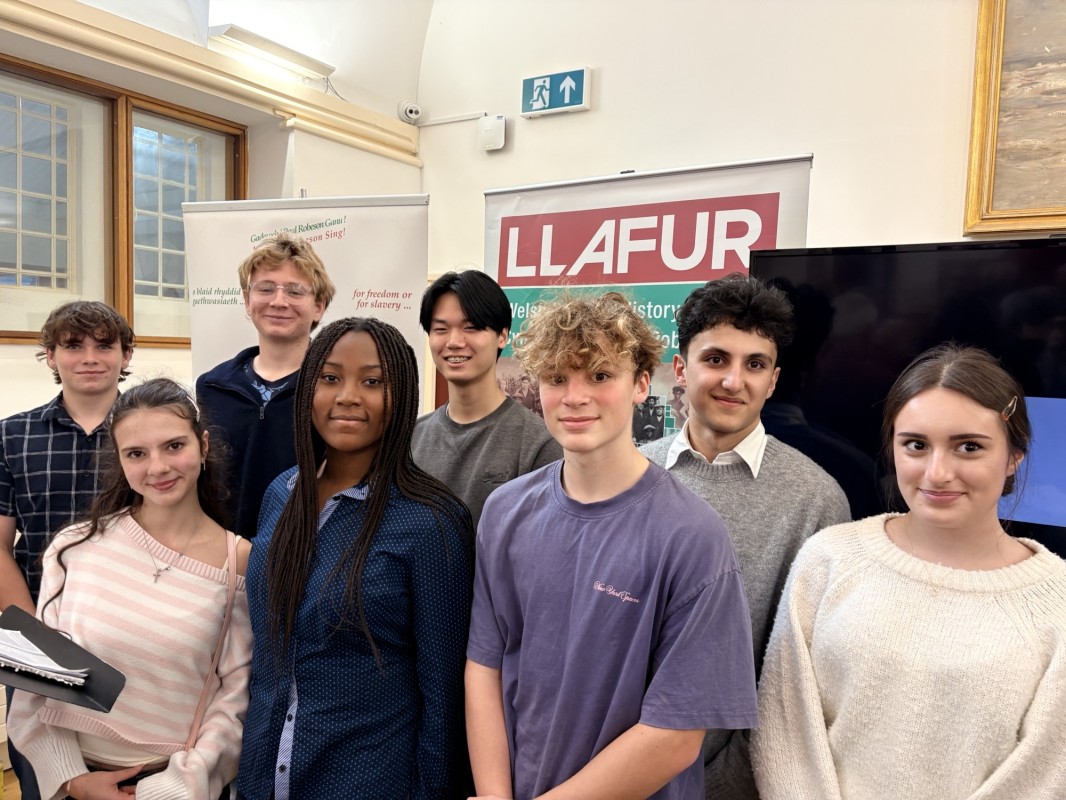
Our Year 11 students recently attended the Llafur Lecture, marking 100 years since the 1926 Miners' Strike, a significant milestone in Welsh social history. The event provided a valuable opportunity to explore the connections between literature, art and politics, and to consider how these influences have helped shape Welsh identity.
The following reflections, written by Year 11 students Mikaeel M and Annabel M, capture the spirit of the day with insight, curiosity and thoughtful analysis demonstrate how engaging with history beyond the classroom can deepen understanding and inspire meaningful discussion about the past and its relevance today.
"100 years on from the 1926 miners’ strike, a peculiar context for our trip to Saturday’s Llafur lecture was our lack of preconceptions. I knew little of the events, which helped me learn their deep significance.
It began with prose on the strikes, analysed by Prof. Dai Smith, who explored the author’s drive for class consciousness: building a shared identity among workers. Though unfamiliar, it paralleled our English Literature discussions of An Inspector Calls, allowing us Year 11s to wrestle with the lecture’s premise.
We heard Lord Neil Kinnock’s take on the strike’s culture, striking for his candour, a trait I particularly enjoyed. A Westminster veteran, yet born in the Valleys, with a personal connection through his father, a coal miner.
Three RWCMD students showcased their artistic representation of the strikes, drawing on Idris Davies’s The Angry Summer, making the suffering tangible.
Post-Subway-sandwich, former First Minister Mark Drakeford and two reciters presented poetry about the strike.
One notion stood out: poetry can express more in fewer words; again, this developed my approach to English Literature.
I am grateful to have attended: the lecture deepened my understanding of the society Wales was, and enabled me to bring this new background into my academic life."
Mikaeel M
"I really enjoyed attending Llafur’s event, 1926: The Angry Summer, exploring the Welsh General Strike and its impact on mining communities across Wales. It was interesting to learn about how the strike affected not just the miners, but their families and communities in different ways, and how it became such an important moment in Welsh working-class history.
I particularly enjoyed Mark Drakeford’s presentation, in which he explored the strike within the wider context of Welsh and World history. He discussed the effects of WWI, the influence of the Russian Revolution ten years prior, and the importance of the coal industry for Wales. I also found it interesting to learn about how the literature surrounding the strike can help us understand the experiences and emotions of the people who lived through it.
I also liked the performance held by students from the Royal Welsh College of Music and Drama, who used puppetry, music, and poetry to tell the story of the strike. I thought the puppets were a really creative way to show what life was like during the strike and I found it fascinating to learn how the puppets had been designed for the performance."
Annabel M